How We Got Here.
Our firm has certain standards below which I’m not prepared to stoop.
Personal values should be judged not only by how a person describes themselves, but by what they continue to do, and refuse to do, when other choices are available.
Those choices may be reflected in corporate management, contracts and the treatment of personal information, or in the lighting, noise, sound and editing of a video. These apparently separate disciplines may rest on the same value judgments.
This living document records those judgments, traces their origins and explains how they become practical standards.
It is not a description of who I am, but a record of how I make choices.
Part I. Authenticity · 1.1 Preserve native camera noise
Digital imaging makes it increasingly possible to remove imperfections, but removing imperfections is not equivalent to improving image quality. Camera noise originates in the imaging system rather than in the subject itself. Excessive noise reduction can remove genuine detail, and temporal processing can introduce motion artifacts. [10]
I do not judge image quality primarily by cleanliness. I prefer retaining some native noise to sacrificing skin texture, surfaces and environmental detail for a superficially perfect image. Necessary restoration is welcome; restoration is not an end in itself.
Value: authenticity before superficial perfection.

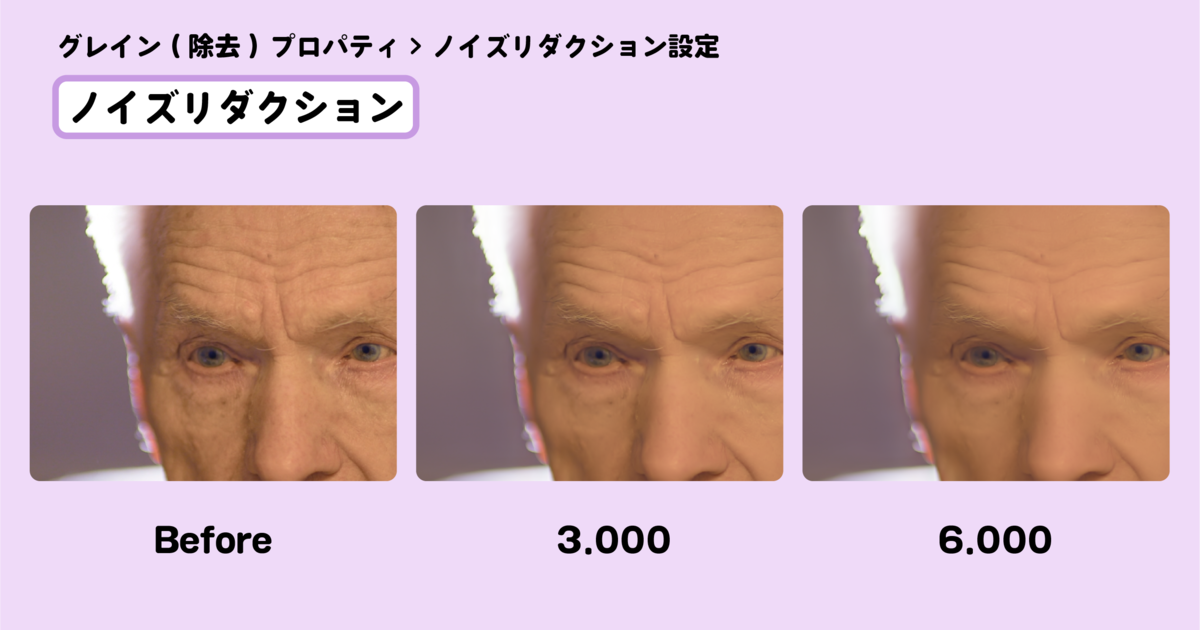
The two original visual references illustrate texture and noise removal. They depict different subjects and are not a controlled before/after experiment; the left image does not establish whether native sensor noise is present.
Part II. Intentionality · 2.1 Shape with directional light
Light does more than make a subject visible: it determines how the audience sees it. I prefer illuminating one side of a subject while retaining shadow on the other.
Discussions of key and fill light by the American Society of Cinematographers offer a technical reference: fill controls how deeply audiences can see into shadows and helps establish mood. [09] Shadow is a controllable expressive variable, not necessarily a defect.
The point is not that every portrait must be half-lit, but that the creator understands direction, contrast and expressive purpose.
Value: creative agency rather than mechanical compliance.

Film still: British Film Institute ↗ · Original cinematographer interview (ASC) ↗
Part III. Restraint · 3.1 Use LUTs with restraint
A look-up table maps colors for technical color-space conversion or creative expression. Its availability does not require imposing a strong style on every image.
I reject aggressive grading as a substitute for content, composition or lighting. Color should help audiences understand the image rather than draw attention to the complexity of post-production.
Personal technical notation: −12 LUTs (software, parameter and unit pending clarification).
Value: having the ability to change something does not require using that ability to its maximum.

3.2 Sound serves the narrative
I want audiences to feel something because they understand the content, not merely because they hear a cue. Background music and auxiliary effects may establish rhythm, reinforce the narrative or direct attention, but should not substitute for substance.
Gain is logarithmic: amplitude ratio A₂/A₁ = 10^(ΔdB/20). Relative to the same initial amplitude, +3 dB increases it by approximately 41.3%, whereas −3 dB decreases it by 29.2%. The operations are reciprocal, but their absolute changes differ. This mathematical relationship is frequency-independent; human perception is not.
Harvey Fletcher and Wilden A. Munson published their research on loudness in 1933. ISO 226:2023 describes equal-loudness contours: different frequencies at the same sound pressure level do not necessarily sound equally loud. [06][07] Modern programme loudness measurement incorporates frequency weighting, such as K-weighting in ITU-R BS.1770. [08]
My initial mixing rule is to reduce the source amplitude of background music and auxiliary effects to between one-third and one-sixth (approximately −9.54 to −15.56 dB), then assess spectrum, perceived loudness and dialogue intelligibility. Music and effects are not inherently high-frequency; materials with pronounced mid-high energy, transients or spectral overlap with dialogue require particular attention to masking. Reduce gain in relevant frequency bands when appropriate, rather than changing pitch; a fixed physical amplitude ratio does not establish a perceived loudness ratio.
Emotion should emerge from content rather than escalating music and effects to create an illusion of importance.
Value: respect the audience's attention and independent judgment.
| Gain | Amplitude | Change |
|---|---|---|
| +6 dB | 199.5% | +99.5% |
| +3 dB | 141.3% | +41.3% |
| 0 dB | 100% | — |
| -3 dB | 70.8% | −29.2% |
| -6 dB | 50.1% | −49.9% |
| -12 dB | 25.1% | −74.9% |
3.3 Why every clip must undergo loudness normalization
Problem and evidence
Clips are recorded with different equipment, microphone distances, environments and gain settings. Equal peaks do not imply equal average energy, spectral distribution or duration. Unmatched clips can therefore interrupt the narrative with unintended level changes or force the audience to adjust playback volume.
ITU-R BS.1770-5 defines programme loudness and true-peak measurement algorithms. EBU R 128 applies loudness measurement to programme normalization, considering loudness range and maximum true peak. Its broadcast reference is −23 LUFS, not a universal target for every short video or individual clip. [12][13]
Equal peaks do not imply equal loudness
Peak level describes maximum signal amplitude; loudness also depends on energy, frequency weighting and time. EBU Tech 3341 distinguishes momentary (400 ms), short-term (3 s) and integrated loudness across the measurement interval. Very short clips may require contextual assessment and listening rather than isolated integrated measurements. [14]
| Dialogue example | Original | Illustrative gain | Adjusted |
|---|---|---|---|
| A | −26 LUFS | +8 dB | −18 LUFS |
| B | −12 LUFS | −6 dB | −18 LUFS |
| C | −20 LUFS | +2 dB | −18 LUFS |
Normalization does not make every sound equally loud
Every audible clip must be assessed within the loudness-normalization workflow, not forced to the same LUFS target. Dialogue provides a stable reference; music, effects and ambience are matched according to narrative roles and masking. Preserve purposeful silence, distance, whispers, impacts and crescendos. Normalization establishes a controlled baseline; compression and limiting are distinct dynamic processes.
Practical standard
- Measure loudness and true peak of audible material; categorize by role and match comparable dialogue to the project reference.
- Correct unintended recording-level differences with clip gain, preserving original files and intentional dynamics. Repair or replace noisy or clipped recordings where necessary.
- Adjust music and effects for spectral energy, dialogue masking and narrative purpose, using §3.2 as an initial attenuation guideline rather than relying solely on peak normalization.
- Verify short-term and integrated loudness and true peak across the finished timeline, listen to transitions, and check delivery requirements.
Normalization should remove unintended level differences caused by production, not meaningful differences in the work. I do not want audiences to repeatedly adjust playback volume to compensate for inconsistent recordings. This responsibility belongs to the creator, not the audience.
Value: respect the audience’s attention, preserve continuity of expression, and make technique serve narrative.
Part IV. Purpose · 4.1 Narrative above chronology
The sequence in which events occur is not necessarily the best sequence for understanding them. Flashbacks and nonlinear storytelling are permitted.
Walter Murch's Rule of Six in In the Blink of an Eye prioritizes emotion, story and rhythm in editing decisions. [05] Formal continuity should not override more important narrative objectives.
Neither flashbacks nor chronological storytelling are inherently superior. Choose the structure that improves understanding. In nonfiction, rearranging presentation must never distort facts, fabricate causality or conceal key evidence.
Value: methods serve purposes; purposes do not justify distortion.
Part V. Sincerity · 5.1 Allow serious things to remain serious
Just Write's 2017 video essay What Writers Should Learn From Wonder Woman discusses bathos: a sudden joke or tonal shift can undermine an established serious, sublime or moving moment. [02]
Humor is not intrinsically wrong, nor is every anticlimax. The question is why a creator should undermine emotion after establishing it through facts, conflict, choices and cost.
The No Man's Land sequence illustrates an action earned by the character's preceding experiences and decisions. The film allows that action to remain serious rather than diminishing its meaning at the crucial moment.
The same principle applies to commercial videos: memorable lines, brand judgments and conclusions should emerge from evidence, conflict, value-chain analysis and revised judgments rather than appearing without justification.
Genuine admiration does not need to be concealed behind a joke.
Value: let serious things remain serious, and great things remain great.
Part VI. Substance · 6.1 Reject fast cutting without narrative justification
Paul Greengrass's influence is not simply handheld photography and rapid editing, but their relationship to character, urgency and narrative rhythm. In a 2007 Post Magazine interview he discussed clarity in fast editing. [03]
When the style was widely imitated, shorter shots, camera shake and rapid cuts could create the appearance of conflict without providing sufficient information. How One Movie Trilogy Ruined Action Films Forever discusses such imitation and misuse; whether this is the exact video I previously watched remains to be confirmed. [04]
The same problem occurs in short-form video. Rapid cuts, animated captions, music and sound effects may maintain attention when content cannot sustain it, but maintaining attention is not equivalent to creating value.
I do not oppose rapid editing or prescribe a minimum shot duration. I oppose cutting without informational gain, emotional justification or narrative purpose. If reducing the cut frequency destroys almost all appeal, the content rather than the editing may need reconsideration.
Value: substance before form, ability before its appearance.
Part VII. Privacy and Trust (proposed)
7.1 Access is not authorization to disclose
Access, possession, use and disclosure are distinct actions. Permission to know or use information in one context does not imply permission to disclose it or use it in another. Helen Nissenbaum's Privacy as Contextual Integrity (2004) concerns appropriate information flows within context. [11] I distinguish four independent authorizations: access, possession, use and disclosure, subject to applicable law.
7.2 Privacy by default
People should not have to continually justify why information should remain private. Absent lawful grounds or explicit permission, protect information by default. Technical feasibility does not justify broader collection, retention or dissemination.
7.3 Data minimization
Information has value but creates management obligations and security risk. Do not collect or retain information merely because it might become useful someday.
7.4 Trust is a long-term asset
Trust takes time to build, and a single decision may destroy it. Evaluate information security and privacy in the context of long-term relationships rather than the benefit of one disclosure. Trust should not be consumed for short-term gain.
This chapter remains proposed; specific personal commitments require confirmation.
Part VIII. The Standards We Maintain
These principles concern imaging, narrative, privacy and information management, but they are not isolated. Authenticity protects detail; agency demands deliberate choices; restraint limits the use of power; purpose governs methods; sincerity protects earned emotion; substance refuses superficial substitutes; privacy limits authorization; trust rejects short-term exploitation.
These standards do not imply that my views will never change. Learning, practice and reflection should correct inaccurate judgments. But revisions should arise from better evidence, understanding and judgment, not because following the standards becomes difficult.
Standards may evolve. They should not be lowered for convenience.
Part VIII. The Standards We Maintain · 8.1 Terminal Punctuation Consistency
Precise expression concerns not only the content of a statement but also the order of the written text. In mixed Chinese–English typography, I choose terminal punctuation according to the character system immediately preceding it, rather than solely according to the language of the document.
When a sentence ends in Latin letters, ASCII digits or an English parenthetical, use an ASCII period, question mark or exclamation mark without a preceding space. When it ends in Chinese characters, retain Chinese terminal punctuation. Do not add punctuation to headings or labels that originally have none.
This is a KAU-specific typographic standard, not a mandatory rule of general Chinese punctuation. I confirmed this choice while reviewing the Alo Quant HCI website on 26 November 2026. Preserve original quotations, legal names, code, URLs and frozen historical editions; paired punctuation remains governed by the existing mixed-width rules.
| Ending | Example |
|---|---|
| Chinese | 人机交互。 |
| English initialism | HCI. |
| English name | Alo Quant. |
| ASCII number | Version 2. |
| Mixed sentence ending in Chinese | HCO 与 HCI 的交叉。 |
| English parenthetical | 人机交互 (HCI). |
Values: precision, expressive order and consistency.
References
- Miss Sloane, John Madden (2016)
- Just Write, What Writers Should Learn From Wonder Woman (2017)
- Paul Greengrass, Director's Chair: Bourne Ultimatum, Post Magazine (2007)
- How One Movie Trilogy Ruined Action Films Forever (2018; candidate source)
- Walter Murch, In the Blink of an Eye (1995)
- Fletcher & Munson, Loudness, Its Definition, Measurement and Calculation (1933)
- ISO 226:2023 — Normal equal-loudness-level contours
- ITU-R BS.1770 — Algorithms to measure audio programme loudness and true-peak audio level
- American Society of Cinematographers, Lighting a Set (technical reference)
- Blackmagic Design, DaVinci Resolve technical documentation
- Helen Nissenbaum, Privacy as Contextual Integrity (2004)
- ITU-R BS.1770-5 (2023)
- EBU R 128 (2023), Loudness normalisation and permitted maximum level of audio signals
- EBU Tech 3341 / EBU Loudness
Why this document is versioned
A standard is meaningful only if its changes can be traced. A public commitment should not silently disappear when its wording changes. Version numbers make the state of knowledge, the basis of a decision and the nature of a correction visible. Alpha identifies a stage of intellectual development; R2 identifies a second revision within that stage, not a new substantive milestone. Original snapshots remain accessible. The latest release is a stable entry point, not a replacement of history.
Value: traceability, accountability and intellectual honesty.
Creative principles and corresponding values
| Creative principle | Corresponding value |
|---|---|
| Preserve native camera noise | Authenticity |
| Directional lighting | Intention |
| Use LUTs with restraint | Restraint |
| Attenuate music and effects | Respect |
| Permit nonlinear storytelling | Purpose |
| Reject gratuitous bathos | Sincerity |
| Reject artificial intensity | Substance |
| Assess loudness across all clips | Respect · Continuity |
| Terminal punctuation consistency | Precision · Consistency |
References and creative influences
The following distinguish selected influences from later supporting evidence. They explain how each source relates to a specific creative rule; they do not imply that every reference was personally studied before the rule was formed.
The Godfather — Gordon Willis
Francis Ford Coppola · 1972 / Gordon Willis, ASCObservation: Willis used selective top light and dark interiors, leaving the eyes partially obscured. The BFI retrospective and his ASC interview document a deliberate approach to visibility; not every shadow is meant to be filled.
Application: For §2.1, choose which parts of the face the audience should see, and which should remain ambiguous. Direction and contrast should be motivated by the subject and story, not merely by a fashionable look.
Intention · Creative agency

What Writers Should Learn From Wonder Woman
Just Write · 2017Observation: The essay examines bathos: a sudden comic or tonal deflation can undermine a serious emotional moment. The No Man’s Land sequence illustrates a climax supported by earlier choices and obstacles.
Application: For §5.1, establish emotion through evidence, conflict and cost. Do not insert an unnecessary joke simply to avoid the responsibility of sincere expression.
Sincerity · Sincerity and narrative purpose

The Bourne Series — Paul Greengrass
How One Movie Trilogy Ruined Action Films Forever · 2018Observation: Greengrass discusses the relationship between fast editing and clarity. The related critique distinguishes his approach from imitations that use shaky movement and brief shots without sufficient spatial or narrative information.
Application: For §6.1, a cut should contribute information, an action, a response or a justified change in emotion. Cutting more often is not by itself a greater narrative achievement.
Substance · Substance over appearance
Watch candidate video ↗Read Greengrass interview ↗Bordwell’s analysis ↗
DaVinci Resolve — Temporal Noise Reduction
Blackmagic Design · Reference ManualObservation: The reference manual advises balancing temporal noise reduction against motion artifacts and unwanted softening of detail. Noise and genuine image texture cannot always be separated perfectly.
Application: For §1.1, judge restoration by the details that remain, not by the apparent cleanliness of the frame. The photographic illustration is not a controlled test or proof of native sensor noise.
Authenticity / Restraint · Authenticity and restraint
EBU R 128 / ITU-R BS.1770
European Broadcasting Union · ITUObservation: Loudness measurement considers weighted signal energy over time; equal peaks do not imply equal loudness. EBU R 128 applies loudness normalization at programme level, not an identical target for every sound clip.
Application: For §§3.2–3.3, check every audible clip, match comparable dialogue, preserve intentional dynamics, and set music and effects according to narrative role. The standards support the method, not a mandatory personal 3–6× gain ratio.
Respect · Respect the audience

In the Blink of an Eye — Walter Murch
Silman-James Press · 1995 / 2001Observation: Murch’s Rule of Six prioritizes emotion, story and rhythm when evaluating cuts. This provides a framework for choosing an editing method according to its narrative function rather than formal continuity alone.
Application: For §4.1, a flashback is justified by when information should reach the audience. It is an application of the narrative-first principle, not a claim that Murch mandates flashbacks. In nonfiction, factual causality must remain intact.
Purpose · Purpose and creative agency
Film stills, photographs and book covers are linked to their source pages; they are not verified video-essay frame captures. Reproduction rights have not been independently confirmed.